Blog

  • Mentally Stimulating Games While Walking Your Dog

    Taking a walk is always fun, but here are some fun games to keep your dog physically enthusiastic as well as sharpening up their grey matter…

    “Treasure hunt.” Take along his favorite treats and as soon as he gets distracted from you, toss one and tell him to “find the treat.” You might have to guide him the first few times, but this game is learned easily and teaches him to stay focused on you.

     “Pathfinder.” If you’ve gotten in a rut taking the same walk every day, chances are Fido’s as bored as you are. Vary your route and make it challenging. Climb stairs, walk on curbs, jump over small barriers, or even splash through some water. Keep his attention by abruptly changing direction and he’ll soon be keeping his eye on you!

    “Red light, green light.” You played it as a kid. Now teach it to your dog! As you walk, stop suddenly and say “red light!” (or whatever word you want to be the command). Sometimes go as soon as he sits at your side, and sometimes wait for a bit. Keep him off balance, never knowing what you’ll do next, and you’ll sharpen his attention right up.

    “Follow the leader.” Do you have a dog that insists on being out in front? This game will teach him who the leader is. Each time he heads out in his own direction, immediately change directions so he has to turn to catch up with you. Keep moving, but keep him following you.

    “Come!” While walking with your dog, suddenly reverse direction, running backward and calling his name. He’ll decide coming when called is a fun game, and it’s one of the most important things you can teach him.

    “Push-ups.” At varying intervals, stop your walk and quickly have your dog sit, down, and sit again. Then break into a run or give him a treat. Soon he’ll be watching you closely to see what you’re up to next.

    “Dribbling.” Take along a soccer-ball when you walk your dog. Push it with your feet and let him push it around, too. Just be careful you don’t step on the ball or on Fido, either!

    “Flirt-pole.” A flirt pole is a long pole with a lure at the end. You dangle and dance it in front of him as you walk. He’ll love trying to grab the lure and you are always in control due to the length of the pole.

    “Parkour for dogs.” This urban agility training is so much fun for both you and your dog, it will turn the way you walk your dog on its head. Parkour combines dog agility with your daily walk to make his world (and yours) exciting and stimulating. He’ll jump, climb, balance, crawl under, and go around obstacles you see every day one every street in town. For detailed information, check out the International Dog Parkour Association website.

  • June 26 is National Take Your Dog to the Office Day!

    In 1999, when Pet Sitters International (PSI) suggested National Take Your Dog to the Office Day, it might have been a bit of a hard sell. After all, our fur babies do demand attention, particularly if they are young or not well socialized. But people around the nation agreed that our canine companions should have a special day and the first Friday after Father’s Day was set.

    Even though having your pal beside your feet might hinder your tasks a bit, there are three solid reasons for following this nationally recognized day. Perhaps pointing these out to your boss will make him (or her) a believer, too.

    1. The most obvious, of course, is that most people love dogs. They are often cute and winsome and their tails wag and eyes laugh whenever someone even looks their way. Her soft, fluffy coat or his silly expression draws people in and just makes them feel a bit happier. Naturally, you are filled with pride when others see your beloved pooch and make sweet remarks about him.
    2. This reason is the one that might win your boss. Positive interaction among coworkers has ratcheted up a notch when Fido breaks the ice with that shy colleague you’ve been unable to draw into a conversation. The team member you’ve thought you had nothing in common with shows her delight in your dog and introduces you to her own fur baby. Better communication and teamwork are surely tradeoffs for having your pup at work with you once a year.
    3. Another reason is that more and more frequently employers are allowing pets in the workplace. Why you ask? Well, it makes for a fun, happier environment as well as lowers stress levels of employees and creates an environment that is more flexible and creative. 
    4. Dogs in the workplace nurture productivity. When employees are less stressed and happier, they have a better chance of being productive and allows for the creative juices to flow. Dogs can create a camaraderie that may not have happened before and those relationships at work can spark new ideas. 
    5. Healthcare benefits abound! When people have dogs, they are shown to take more walks which reduces stress and obesity. Other health benefits are that with lower stress levels and healthier lifestyles, that reduces the amount of time that people spend at the physician’s office. Less time at the doctor means more time being productive and happier. Who doesn’t like happier, healthier employees? Plus, when pet parents are more proactive in their pet’s care, they also tend to be more proactive in their own health as well. 2 birds, 1 stone. Well, in this case, 2 dogs, one ball. 

    If you are the boss at work and would like more information about celebrating Take Your Dog to Work Day, a free tool kit is available for you to download, full of tips and resources to help make this special day a success. So grab your briefcase and a doggy bag of treats and set the pace for your company!

  • Pet Appreciation Week 2020

    No one knows for sure, but the best estimates by geneticists say the first domestic animal was the dog and at first they were just tamed wolves. That was between 13,000 and 30,000 years ago. Through the ages, dogs have evolved into many different breeds for many different purposes. The one thing they all have in common is that they can all be our closest friends and greatest allies. This is definitely one thing nature got right!

    Each year since 1981 we’ve set apart the first week in June to celebrate this amazing relationship. There is so much to appreciate about our four-legged buddies. They assist people every day to have a better life, from living more independently to recognizing signs of stress and illness. They lead the blind, hear for the deaf, and comfort the anxious. They find lost children and pull swimmers from the water. Dogs work alongside their humans on the police force, in the military, and one the farm. Guarding us and keeping us safe, they lay near our feet where they are the most content.

    We all grew up with noble canines like Lassie, Rin Tin Tin, Beethoven, Marley, and Toto. But the most important dog that ever lived is sitting by your side right now, happy to simply be in your presence. There is nothing the world can throw at us that can turn our dog’s devotion away from the human he adores and he doesn’t need wealth or fame to make his world perfect.

    So what will you do this year to show your dog how irreplaceable he is? Here are a few suggestions.

    ●  Feast your friend! Dogs are omnivores, meaning they need all kinds of food to get their proper nutrition. And while it’s best to stick to the diet you and your vet agree on, an occasional treat will be delightful to dogs. They can pretty much eat the same foods you do, but avoid sugar, alcohol, chocolate, grapes, raisins, garlic, macadamia nuts, onions, and the artificial sweetener Xylitol. Small portions, too, please!

    ●  Let your pooch splash in a “doggie pool” (kids’ pool).

    ●  Take him for a walk and let him choose the direction and how long he gets to sniff a spot (he’s checking his “d-mail”)!

    ●  Get down on his level. Lie down on the floor with him. It’s so funny to watch his glee when he’s got you on his territory!

    ●  Take a ride in a car with partially open windows (but don’t let him put his head out).

    ●  Give him a long, satisfying scratch in all the places he loves it most.

    ●  Set up a doggy play-date and take him to the dog park to play with his friends. Let him do what he pleases and enjoy the summer sun with him.Maybe you’ve been appreciating other people’s pets until now, but this year is your year to get a dog of your own. Check out your local pet shelter or rescue group and get a friend that will appreciate you as much as you appreciate him!

  • Best Home-Made Treats for Your Dogs

    The summer has arrived and brought warm temperatures with it. While you’re out enjoying the beaches and hiking trails with your best friend, make sure that you’re both staying nourished and hydrated.  Here are some treats that both you and your pup can enjoy!

    Melon Berry Froyo Bones

    This simple, mouthwatering recipe is brimming with vitamins, antioxidants, and sweet flavor. Imagine a yummy, berry popsicle with the tangy addition of frozen yogurt.

    Ingredients:

    • An ice tray (you can find custom molds on Amazon)
    • 2 cups watermelon
    • 1/4th cup of water
    • Equal parts blackberries, raspberries, and strawberries (about 2 each) 
    • 1 cup yogurt

    What to do:

    First, use a spoon to stir the berries into a cup of yogurt and place the mixture in the fridge to chill. Grab your ice tray and fill it about a quarter of the way up with the watermelon mixture. It takes about 2 to 3 hours to freeze.

    Once the watermelon has frozen completely, take the ice tray out and fill the remaining space with your yogurt concoction and place it back in the freezer until solid. When you’re hanging out poolside, pop one of those babies out and break off a piece for your pup too. Cheers!

    Baked Pumpkin Poppers

    These tasty treats are more for our dogs than for us, as they don’t contain any added sugar. Even if you’re a beginner baker, you can’t mess these baked goodies up. Think of these as donut holes for pups!

    Ingredients

    • ½ a cup Flaxseed
    • 1/4th a cup pumpkin puree
    • 1/4th a cup peanut butter
    • 1 cup flour
    • 1 cup whole wheat flour
    • 2 tsp ground cinnamon
    • 1/4th water
    • 2 bowls, an oven, and a pre-sprayed baking sheet

    What to do:

    Preheat your oven to 325 degrees.

    Mix the flour and whole wheat flour in one of your bowls. Use the second bowl to thoroughly stir the flax seed into the water. It’s important not to skip this step! Mixing the wet and dry ingredients too soon will make it difficult to merge them later on.

    Add the peanut butter, pumpkin puree, and cinnamon to the wet ingredients. Once you’ve got a thick paste going, you can slowly begin mixing in the flour. Take your time and be sure not to rush this step; by now, you should have almost a cookie-dough texture. Use your hands to knead out any dry patches of flour.

    Roll your dough into small, donut-hole sized balls and place them onto your baking sheet. Since there isn’t any baking soda included, you don’t have to set them very far apart as they won’t expand.

    Depending on your oven, these treats could take 15-21 minutes to cool, so continue to keep an eye on them during that timespan. If you’ve got a senior pup, you can take them outright at the 15-minute mark for a softer, easier to chew option.

    Coconut Carob 

    Something about the taste of chocolate and bananas is just so satisfying, isn’t it? Our dogs can’t eat cocoa derivatives, but carob is the next best thing. You and your best friend can eat this recipe frozen or chilled.

    Ingredients:

    • 2-3 bananas
    • 3/4th a cup of peanut butter
    • 1-2 TBSP of carob for flavor
    • An ice tray

    Start by mashing up your bananas and stirring them into the peanut butter, if you have a hand-mixer, go ahead and use it for this step. However, you can also use a fork or spoon. Then, add the carob; this part is really at your discretion. If your dog has never had it before, consider making your first batch with one tablespoon and see how it goes.

    Place the mixture into an ice mold and allow them to freeze. If you don’t have one, you can always allow the blend to chill in the fridge for a few hours so that it’s not completely frozen. Once cold, add it to your dog’s breakfast, and throw a spoonful into your oats for a yummy wake-up meal!

  • Best Cat Breeds for Active People

    We mostly find them indoors napping along a window sill, but cats love their exercise just as much as we do! If you’re looking for a furry friend to accompany you on adventures but you’re not much of a dog person, why not try a cat instead? Believe it or not, our tiny, domesticated lions and tigers haven’t lost their touch. Even in their smaller size, they’re still keen, highly intelligent hunters. 

    Here are some of the most active breed varieties, don’t let the dog lovers have all the fun!

    The Bengal

    These felines aren’t just loving companions, they’re true-blue athletes. Not only do they love to jump about and sit atop a high perch, but Bengal cats are also avid swimmers. Take them out to the family’s favorite lake or for a beach-side excursion and watch how quickly they take to the water. 

    It’s best to keep them leashed outdoors as Bengals have a high prey drive. Should your kitty find themselves distracted by a bird or a squirrel, it’s likely that they’ll chase their target up a tree without a second thought.

    The Abyssinian 

    Owners who enjoy playing a game of catch will love the Abyssinian breed. Brightly colored and noisy balls, ropes, faux-mice, and spin-machines are perfect tools for interacting with your Abyssinian. They’re considered to be highly intelligent, smarter than most other breeds of felines, and in need of a challenge.

    Like a dog, the Abyssian excels at following commands and learns how to do tricks rather quickly. While you’re at work, these kitties are more than happy to entertain themselves. Just don’t leave them alone for too long, or they’ll make use of toys that belong to you.

    Oriental Shorthair

    If ever there were a cat that could be a best friend to your little ones, it’s the Oriental Shorthair! This especially true for the Harry Potter fans of the family considering how much they resemble the house elf, Doby. 

    This extremely vocal breed has large, fox-like ears that are perfect for a few hours of hide and seek. Like the Bengal, Shorthairs are instinctively inclined to chase anything moving at high speeds. 

    Get a feathered throw toy and watch them go after it again and again. The Oriental Shorthair enjoys the water, and will likely follow you right into the bathtub. Just be careful to dry up any water that ends up in those massive ears!

    The Burmese
    These googly, green-eyed cats behave like an extra shadow. All they want is to be right next to their owner and included in whatever it is they’re up to. Burmese cats are among the most powerful domesticated breeds despite their fluffy appearance.

    That said, these guys are gentle giants. They’re highly social, happily scoping new faces and surroundings. If you plan on taking them outdoors for a walk around the neighborhood or to explore the backyard, keep them leashed! These kitties have their own agenda and will quickly wander away if left unattended.

  • 12 Fun Things To Do With Your Dog This Summer

    Summertime and the living is easy… or it should be, anyway. When the sun turns up the heat, finding things to do that are fun and safe is sometimes a challenge. Here are 12 activities we recommend that will make this the best summer ever for you and your fur buddy.

    1. Go take a hike! Seriously. Take your dog with you and hike shady trails. Finding places that are dog-friendly to hike is no problem since the world is at our fingertips online. But to make things even easier, here are some awesome National Parks that allow dogs on the hiking trails. Check out the websites for particulars about hours, rules, and restrictions.
      Yosemite National Park
      Grand Canyon National Park
      Mammoth Cave National Park
      Great Sand Dunes National Park
      Petrified Forest National Park
      North Cascades National Park
      Shenandoah National Park

    Cuyahoga Valley National Park

    Acadia National Park

    1. Camp out in the wilds. Take Fido on your annual camping retreat or just overnight. Dogs love it when we enter their world, and camping with your pup is sheer heaven to him. Here are the simple rules:

      Never leave him alone. Your fur buddy should not be left behind when you leave camp, even for a short while. Keep Fido on his leash in camp. Most parks and camping areas have a six-foot rule, which means the leash can’t be any longer than that.

      Pack it out. Human waste and dog waste alike should be removed in plastic bags.

      Snuggle down together. Most places require your dog to be with you in your tent or your car when sleeping.

      Provisions for your pet. You can let your dog carry his own backpack, but be sure you pack it with a bowl, water, and kibble for him to eat.

    2. Backyard BBQ and splash party. A fenced yard allows you to barbecue your dinner outside in the cooling evening, and your pup will have fun splashing in his doggy-pool or trying to catch the sprinklers while it’s still hot, too.

    3. Make frozen treats together! Even the kids can get in on this one, and believe it or not, our list of frozen treats are kid-friendly, too.

    4. Shoot your dog. Okay, we mean with a camera, of course! Here are some helpful tips to get those Instagram-worthy photos of life with Fido. The number one tip from professional photographers is “take lots of photos.” Turn off the flash. Get down on his level, and get playful.

    5. Water sports. Taking your dog to the beach or a lake can be the most fun you’ll have all summer. Three things to remember: Give him water to drink. Lots of it. Give him someplace to get out of the sun (an umbrella, a tree). His feet get hot, too. Let him rest on a towel where his feet can cool off when he’s not splashing in the water.

    6. Teach that old dog a new trick. In just minutes a day, you can teach a new trick to Fido. Keep the sessions short and stop before he’s bored.

    7. Have a picnic. Many parks have facilities for picnics. If allowed, your pup will enjoy spending time with his two favorite things: you and food.

    8. Tour area dog parks. Look for parks with shade and grass to play in.

    9. Check out Starbucks® secret menu and treat him to a Puppuccino
      .
    10. Join PupScouts and find friends and activities to earn badges together. Scouting was never this fun!

    11. Take him out to the ballgame! Here are some dog sports that use balls. Flyball, catch ball, diving for balls, and of course, chasing one as many times as you throw it (but play in the early morning or late evening so he doesn’t get overheated).
  • Understanding Puppy Body Language: What Your Pup Is Telling You

    Understanding Puppy Body Language: What Your Pup Is Telling You

    Living with a puppy can feel like discovering your own secret language. You learn the zoomies, the sleepy sighs and the very specific look that means, “I definitely did not eat that.” 

    Still, puppies cannot tell us exactly what they want or how they feel. Learning their body language can help you understand your new companion and build a stronger bond.

    Every puppy has a personality, too. Some are bold and curious. Others are more cautious. The key is learning what your puppy is communicating.

    How can you tell when your puppy is relaxed?

    A relaxed puppy usually has a loose, soft body and natural movement. You may notice soft eyes, relaxed ears, an open mouth and a gently wagging tail. They may stretch out, lean against you or settle comfortably nearby. 

    How to respond: Enjoy the moment. Gentle interaction, play or simply spending time together can reinforce that sense of comfort.

    What does a puppy’s playful body language look like?

    The classic play bow is a great clue. Your puppy lowers their front end while keeping their rear end up. Bouncy movement, a wiggly body and a loose tail can also signal that they are ready for fun.

    How to respond: Let the play continue when both puppies remain relaxed and engaged. If one puppy becomes overwhelmed, pause and give them space.

    How can you recognize when your puppy is worried?

    Stress signals can be surprisingly subtle. Lip licking, yawning, turning away, pinned-back ears, a tucked tail, pacing, panting when it is not hot, freezing or trying to move away can all signal discomfort.

    How to respond: Reduce the pressure. Give your puppy distance and allow them to move away. Never punish a puppy for communicating discomfort.

    Does a wagging tail always mean a happy puppy?

    Not necessarily. A loose, sweeping wag with a relaxed body can signal comfort. A high, stiff wag can indicate arousal or tension, while a tucked tail may signal fear or discomfort. Always read the entire body instead of focusing on the tail alone.

    How Can Dream Tails Sarasota by Petland Help You Understand Your Puppy?

    At Dream Tails Sarasota by Petland, we believe bringing home a puppy is the beginning of a relationship, not the end of the journey. For many years, our Pet Counselors have helped families find the right pet while providing information about behavioral, nutritional and environmental needs.

    The more closely you learn your puppy’s signals, the easier it becomes to recognize their comfort, curiosity and need for a little extra space. That understanding can make those first months together even more rewarding, and help you build the happy, lasting relationship you’ve been dreaming about.

    Hungry for more? The next chapter’s even better! Follow the paw prints below to keep reading.

    The First 5 Commands Every Puppy Should Learn

    New Puppy Checklist: Everything You Need Before Day One

  • Why Puppy Mental Enrichment Matters as Much as Exercise

    Why Puppy Mental Enrichment Matters as Much as Exercise

    Bringing home a puppy means thinking about the whole picture: good nutrition, healthy growth, exercise, training and plenty of love. 

    There is another important piece, too. Mental enrichment gives puppies safe ways to explore, learn, problem-solve and use their natural instincts.

    A morning walk around Old Bridge gets little paws moving. Letting your puppy stop and sniff gives their brain a workout, too. The best routines make room for both.

    What does mental enrichment mean for puppies?

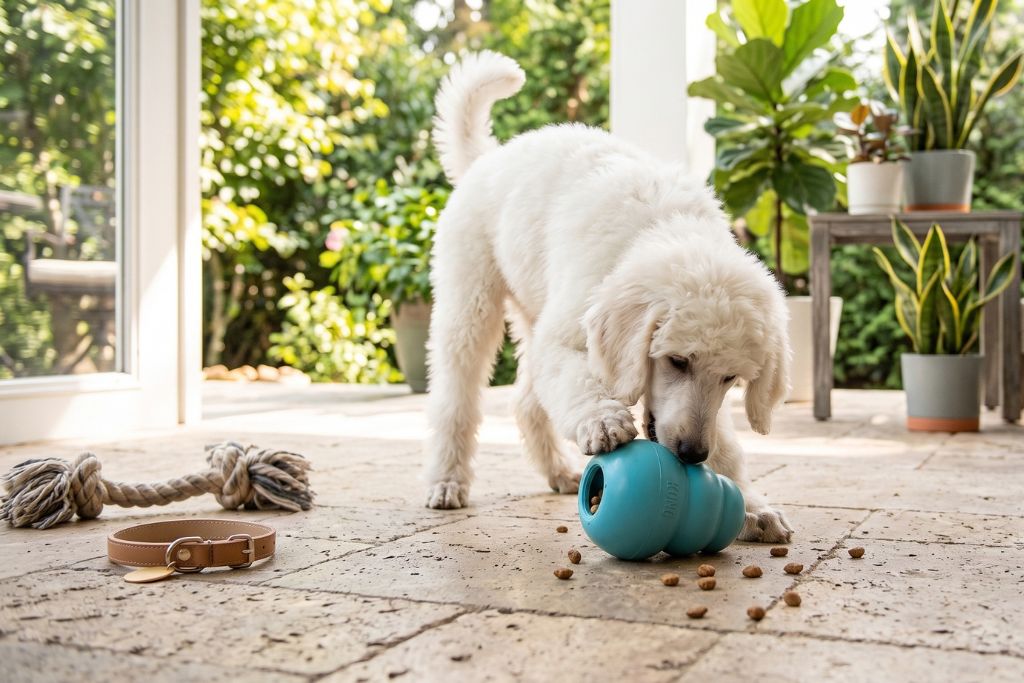
    Mental enrichment gives puppies appropriate ways to use their brains and senses. It can include training, food puzzles, scent games, interactive toys and new experiences.

    It does not need to be complicated. A few minutes of focused play can turn an ordinary part of the day into an opportunity to learn.

    Why is mental stimulation just as important as exercise?

    Physical exercise helps puppies use their energy. Mental enrichment adds another kind of workout and can help prevent boredom and frustration. The AKC recommends age-appropriate activity for puppies and recognizes training and interactive games as ways to provide mental stimulation. 

    Try these simple activities:

    • Turn meals into a search. Hide small portions of your puppy’s regular food in safe spots and let them sniff it out. Scent activities encourage natural exploration. 
    • Practice a new skill. Short, positive training sessions encourage puppies to think and learn. Start with simple cues and reward desired behaviors. 
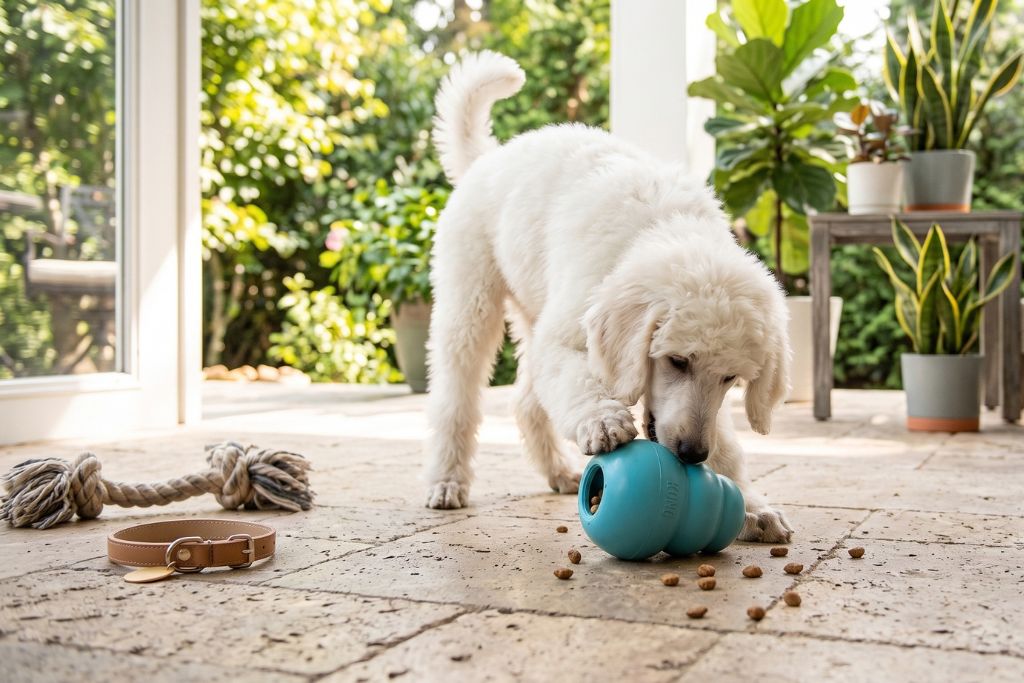
    • Offer interactive toys. Food puzzles and enrichment toys encourage problem-solving. Choose age-appropriate options and supervise their use. 
    • Make walks a sensory adventure. A stroll through your neighborhood gives your puppy new sights, sounds and scents. Near Mannino Park or around the Laurence Harbor area, let your puppy safely stop and sniff.

    How can everyday adventures become enrichment?

    You do not need to plan an elaborate activity every day. Your puppy can learn from small changes in their routine.

    A quiet sniffing session at home can be enrichment. So can exploring a new room or practicing a familiar cue somewhere different. A calm outing near Raritan Bay can provide new sights and sounds. Cheesequake State Park in nearby Matawan offers another setting to experience nature, with five designated trails and varied habitats. Always check current park rules before bringing your puppy. 

    How does PetCenter support healthy puppy development?

    At PetCenter Old Bridge, we know bringing home a puppy is the start of a new relationship. That means helping families feel prepared for the everyday parts of puppy life, too.

    Our resources include breed information and training support, while our team remains available as families adjust to life with a new companion. PetCenter also offers complimentary professional training sessions as part of its ongoing support for new owners. 

    From a puzzle toy at home to a new scent along a walk in Cliffwood Beach, those little moments add up. Your puppy is learning all the time. Giving that curious mind something appropriate to explore can help make those early months happier, richer and more rewarding for both of you.

    Hungry for more? The next chapter’s even better! Follow the paw prints below to keep reading.

    Puppy Potty Training Mistakes New Owners Should Avoid

    8-Week-Old Puppy Potty Training Schedule: What to Expect

  • If Your Puppy Were a Halloween Movie Character, Who Would They Be?

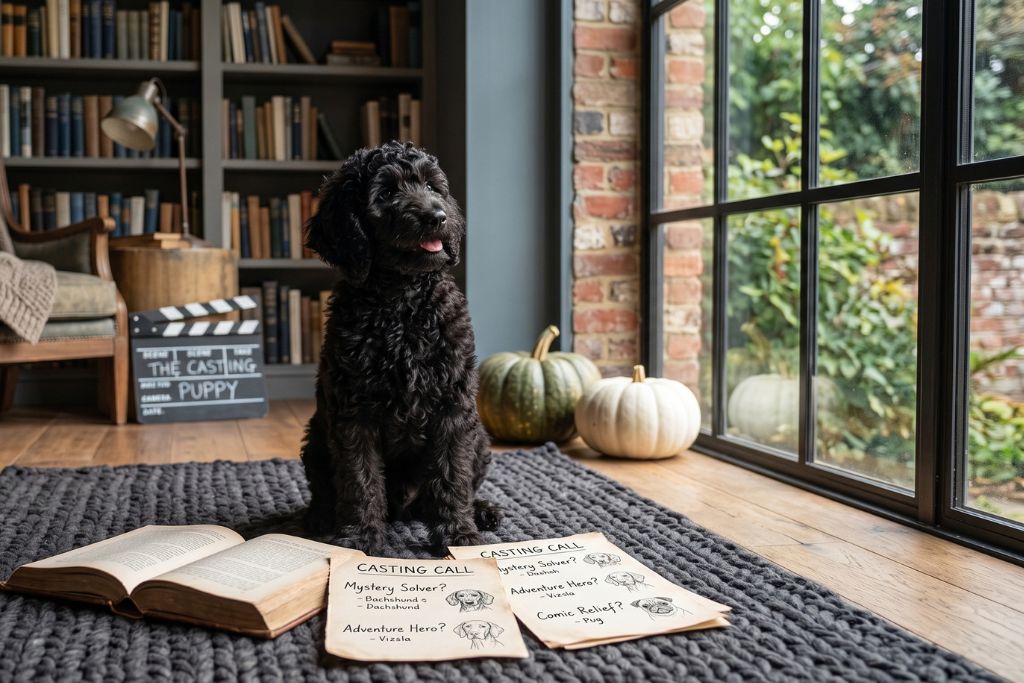
    If Your Puppy Were a Halloween Movie Character, Who Would They Be?

    Every great Halloween movie needs a lovable cast. The brave hero. The curious sidekick. The one who hears a mysterious noise and investigates. And, of course, the adorable character who steals every scene.

    Now imagine your puppy landed a starring role. Who would they play?

    Puppies have their own personalities, quirks, and ways of responding to the world. Breed can offer clues about common traits, but every puppy is an individual. Getting to know those little details is part of the fun of building your life together.

    Which Halloween Movie Character Is Your Puppy?

    The Fearless Adventure Hero

    Your puppy sees a new place and thinks, “Excellent. Let’s investigate.” They are curious, playful, and ready for the next adventure. A Labrador Retriever, Golden Retriever, or Vizsla could make a fun fit for this role. Of course, your own puppy gets the final casting call.

    The Lovable Comic Relief

    This pup did not come to follow the plot. They came to make everyone laugh. They may be goofy, affectionate, and wonderfully enthusiastic about everything. Think French Bulldog, Pug, or Boston Terrier.

    The Cozy Cottage Companion

    Forget the haunted house. This puppy has found the blanket and is staying there. They love being close to their people and may happily spend Halloween supervising from the sofa. A Shih Tzu, Maltese, or Havanese could make a charming fit.

    The Curious Mystery Solver

    Did something move behind the pumpkin? Is that a new sound? Your puppy needs answers immediately. Curiosity is a normal part of puppy development. Safe exposure to new sights, sounds, people, and environments also helps puppies learn about their world. A Beagle, Dachshund, or Australian Shepherd could make this character especially entertaining.

    The Snack-Obsessed Sidekick

    Every movie needs the character who somehow knows exactly where the snacks are. This puppy has excellent priorities. They may be eager to participate and ready to turn training into a game. A Cocker Spaniel, Basset Hound, or Pembroke Welsh Corgi might happily audition.

    The Gentle Heart of the Story

    This is the puppy who makes everyone feel at home. They may be affectionate, attentive, and happiest near their favorite people. Their superpower? Making even the spookiest movie feel warmer. A Cavalier King Charles Spaniel, Newfoundland, or Collie could make a delightful fit.

    How Can You Help Your Pup Be the Star of Their Own Story?

    The best way to understand your puppy is to spend time observing them. Notice what excites them, what makes them cautious, and what helps them feel comfortable.

    Early socialization matters, too. The American Veterinary Society of Animal Behavior identifies the first three months as a particularly important period for positive, safe introductions to new experiences.

    Our Pet Counselors help families find a companion that fits their lifestyle. We also provide guidance on training, nutrition, behavior, and enrichment as you begin your life together.

    So grab the popcorn, pick your puppy’s movie role, and enjoy the adventure. Your newest family member may just become the star of your favorite story yet.

    Hungry for more? The next chapter’s even better! Follow the paw prints below to keep reading.

    How Puppies Know Fall Is Coming (Even Without a Calendar)

    Which Summer Vacation Would Your Puppy Choose?

  • Understanding Puppy Body Language: What Your Pup Is Telling You

    Understanding Puppy Body Language: What Your Pup Is Telling You

    Living with a puppy can feel like discovering your own secret language. You learn the zoomies, the sleepy sighs and the very specific look that means, “I definitely did not eat that.” 

    Still, puppies cannot tell us exactly what they want or how they feel. Learning their body language can help you understand your new companion and build a stronger bond.

    Every puppy has a personality, too. Some are bold and curious. Others are more cautious. The key is learning what your puppy is communicating.

    How can you tell when your puppy is relaxed?

    A relaxed puppy usually has a loose, soft body and natural movement. You may notice soft eyes, relaxed ears, an open mouth and a gently wagging tail. They may stretch out, lean against you or settle comfortably nearby. 

    How to respond: Enjoy the moment. Gentle interaction, play or simply spending time together can reinforce that sense of comfort.

    What does a puppy’s playful body language look like?

    The classic play bow is a great clue. Your puppy lowers their front end while keeping their rear end up. Bouncy movement, a wiggly body and a loose tail can also signal that they are ready for fun.

    How to respond: Let the play continue when both puppies remain relaxed and engaged. If one puppy becomes overwhelmed, pause and give them space.

    How can you recognize when your puppy is worried?

    Stress signals can be surprisingly subtle. Lip licking, yawning, turning away, pinned-back ears, a tucked tail, pacing, panting when it is not hot, freezing or trying to move away can all signal discomfort.

    How to respond: Reduce the pressure. Give your puppy distance and allow them to move away. Never punish a puppy for communicating discomfort.

    Does a wagging tail always mean a happy puppy?

    Not necessarily. A loose, sweeping wag with a relaxed body can signal comfort. A high, stiff wag can indicate arousal or tension, while a tucked tail may signal fear or discomfort. Always read the entire body instead of focusing on the tail alone.

    How Can Petland Help You Understand Your Puppy?

    At Cosmick Media SEO Blogs, we believe bringing home a puppy is the beginning of a relationship, not the end of the journey. For nearly 60 years, our Pet Counselors have helped families find the right pet while providing information about behavioral, nutritional and environmental needs.

    The more closely you learn your puppy’s signals, the easier it becomes to recognize their comfort, curiosity and need for a little extra space. That understanding can make those first months together even more rewarding, and help you build the happy, lasting relationship you’ve been dreaming about.

    Hungry for more? The next chapter’s even better! Follow the paw prints below to keep reading.

    The First 5 Commands Every Puppy Should Learn

    New Puppy Checklist: Everything You Need Before Day One

  • When Should You Choose Custom Window Treatments?

    When Should You Choose Custom Window Treatments?

    Custom window treatments make sense when your windows, your rooms, or your expectations call for something more thoughtful than an off-the-shelf solution. They are measured for the window itself, then selected around light control, privacy, style, and how you actually use the room.

    And that matters. Window treatments do more than cover glass. They help establish the character of a room. A crisp roller shade can feel wonderfully restrained. A Roman shade can bring softness and polish. Plantation shutters add architectural presence.

    In an Allentown home, that can make a difference from the sunny West End to the older homes around Old Fairgrounds. The windows themselves often have plenty to say.

    So, when should you choose custom window treatments?

    Here are a few very good reasons.

    1. Your windows are…complicated.
    Odd shapes, unusually large windows, specialty windows, or tricky dimensions can make standard sizes frustrating. Custom treatments are measured for the actual window. We also offers solutions for specialty-shaped windows.

    2. You want the room to look finished.
    A treatment that fits properly creates a cleaner, more intentional appearance. You can also choose from different materials, styles, fabrics, and finishes instead of accepting whatever happens to come in a box.

    3. Light control matters.
    Bedrooms, media rooms, home offices, and sunny living spaces all have different demands. Cellular shades, roller shades, blinds, and shutters offer different approaches to privacy and light control. We carry  several Hunter Douglas options designed around those needs.

    4. You care about comfort, too.
    Some window treatments can contribute to insulation and help manage sunlight. Cellular shades, for example, use a honeycomb structure that creates insulating air pockets.

    5. You have a very specific vision.
    Sometimes you know exactly what the room needs. Sometimes you only know that the current blinds are definitely not it. Both are perfectly respectable starting points.

    How can you make the custom window treatment decision easier?

    That is where experience helps.

    At Richards Window Fashions, we have been serving the Lehigh Valley since 2001. We provide custom blinds, shades, and shutters, plus full-service in-home consultations. Our team considers the window, the room, your preferences, and your budget before recommending options. We also install and service what we sell.

    For homeowners around Allentown, Bethlehem, Easton, and the wider Lehigh Valley, that personalized approach can take some of the guesswork out of a surprisingly complicated decision.

    After all, your windows already have opinions. They just need someone experienced enough to listen.

  • What Window Treatments Work Best for Bedrooms?

    What Window Treatments Work Best for Bedrooms?

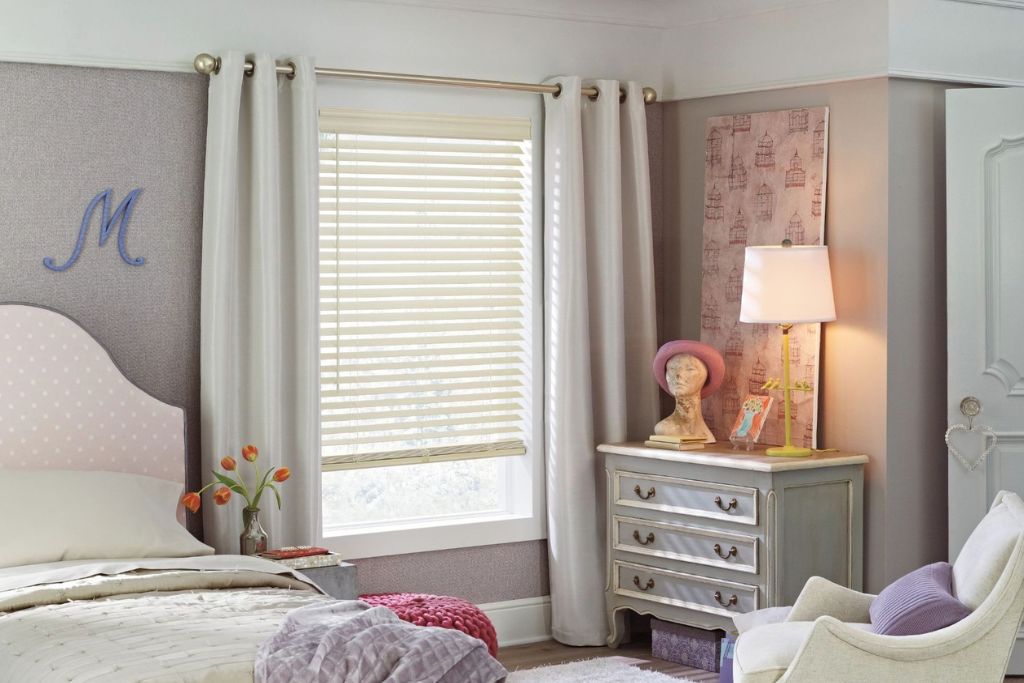
    The best bedroom window treatments balance three things beautifully: light control, privacy, and a sense of calm. Blinds, shades, and shutters can each create a different mood while serving practical needs.

    A bedroom in Allentown’s West End may need different light control than a sunny second-floor room near Hamilton Street. The view, window size, morning sun, and overall character of the room all matter.

    The right treatment should feel considered, not merely added.

    Which bedroom window treatments offer the most light control?

    Cellular shades are an excellent choice when comfort and light control are priorities.

    Their honeycomb construction creates air pockets within the shade. This design helps insulate the window and can also help reduce outside noise. Room-darkening fabrics provide greater control when bright morning light is not welcome.

    For a bedroom facing a bright street in Bethlehem or a sunny backyard in Allentown, cellular shades offer a particularly thoughtful combination of function and simplicity.

    Are Roman shades a good choice for bedrooms?

    Roman shades suit bedrooms where softness and traditional elegance matter.

    Their fabric folds bring texture and visual warmth to the window. They are available in light-filtering and room-darkening options, allowing the look to remain tailored while the function changes with your needs.

    In a traditional home near Allentown’s Old Fairgrounds or a more updated Lehigh Valley bedroom, a well-chosen Roman shade can complement the architecture without overwhelming it.

    When do bedroom blinds make sense?

    Blinds are a practical choice when precise adjustment matters.

    Tilting the slats lets you control incoming light and privacy throughout the day. They also offer a clean, structured appearance that works especially well with traditional interiors.

    For bedrooms overlooking neighboring homes, blinds can provide privacy while still allowing some daylight into the room.

    Can shutters work well in a bedroom?

    Shutters bring a more architectural quality to the window.

    Their solid construction and adjustable louvers provide light and privacy control while creating a tailored appearance. They can be especially fitting in homes where craftsmanship and lasting style take priority.

    That makes them a natural consideration for many established homes throughout Allentown and the surrounding Lehigh Valley.

    How do you choose the right bedroom window treatment?

    Start with the room itself.

    Consider:

    • Morning or afternoon sun
    • Your desired level of darkness
    • Privacy from neighboring properties
    • Window size and shape
    • The room’s existing furnishings
    • The architectural character of your home

    For homeowners in Allentown, Bethlehem, Easton, and across the Lehigh Valley, Richards Window Fashions can help narrow those choices. We offer custom blinds, shades, and shutters, along with in-home consultations to consider your windows and decorating needs in the context of your home, with options designed for different levels of light control, privacy, insulation, and style.

    A bedroom should feel restful and personal. The right window treatment can help create both while complementing the character of your home.

  • What Window Problems Are Common in Pennsylvania Homes?

    What Window Problems Are Common in Pennsylvania Homes?

    Windows are a lot like the rest of us: they work hard, face the weather, and occasionally develop a few complaints of their own.

    In an Allentown home, a window has plenty to contend with. Pennsylvania brings cold winters, humid summers, rain, wind, and plenty of temperature swings. Over time, those conditions can show up in the glass, frame, seals, and hardware.

    So, what exactly is your window trying to tell you?

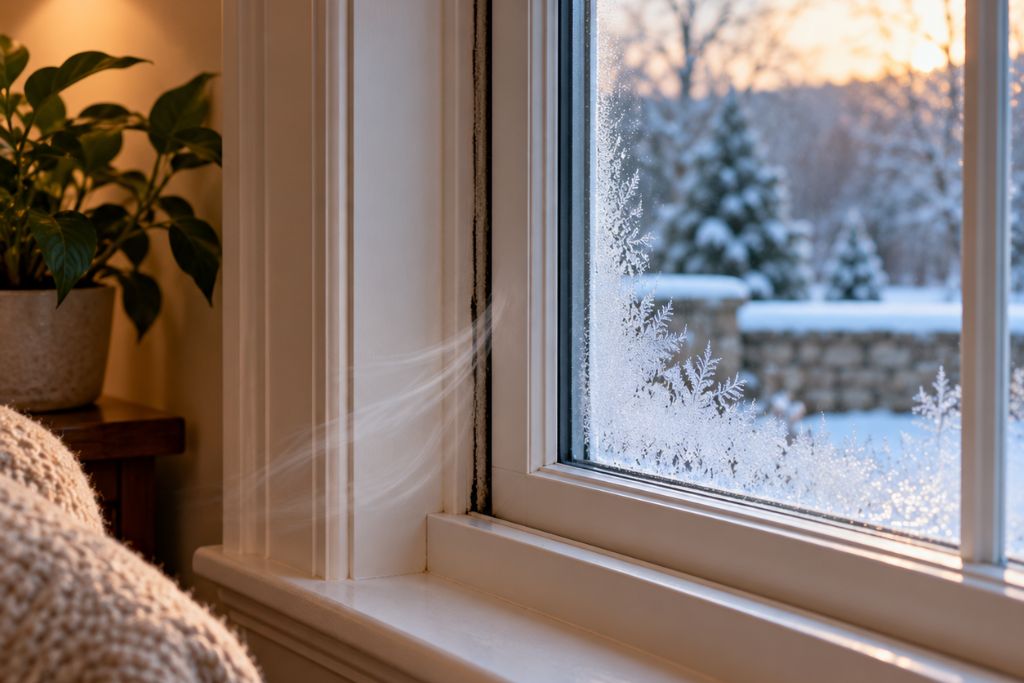
    Why is my window letting in a draft?

    A noticeable chill around the frame is one of the easier problems to spot.

    Drafts can come from worn weatherstripping, damaged seals, gaps, or warped frames. Older windows may also provide less insulation than newer designs.
    If that Allentown window feels noticeably colder than the rest of the room, take a closer look. A draft is worth investigating, not ignoring.

    Why are my windows fogging up?

    Condensation has several possible causes.

    Moisture on the inside surface can occur when warm, humid indoor air meets cold glass. Pennsylvania’s winter temperatures can make this especially noticeable.

    Fogging between panes is a different matter. It can indicate that the insulating seal has failed and moisture has entered the sealed space.

    In a West End home or an older property near Old Allentown, knowing the difference can save you from chasing the wrong problem.

    Why is my window suddenly difficult to open?

    A window should not require a wrestling match.

    Sticking, dragging, or refusing to close properly can result from warped frames, worn hardware, balance problems, or changes caused by weather and age.

    Try not to force it. A window that will not operate properly may need professional attention.

    Why is there water around my window?

    Water infiltration deserves prompt attention.

    Damaged seals, failed caulking, poor drainage, or installation problems can allow moisture around the window assembly. Over time, that moisture can contribute to deterioration and other damage.

    Pennsylvania weather does not exactly make this easier. A rainy afternoon in Allentown can put those weak spots to the test.

    What about cracked glass or damaged frames?

    These problems deserve a closer look.

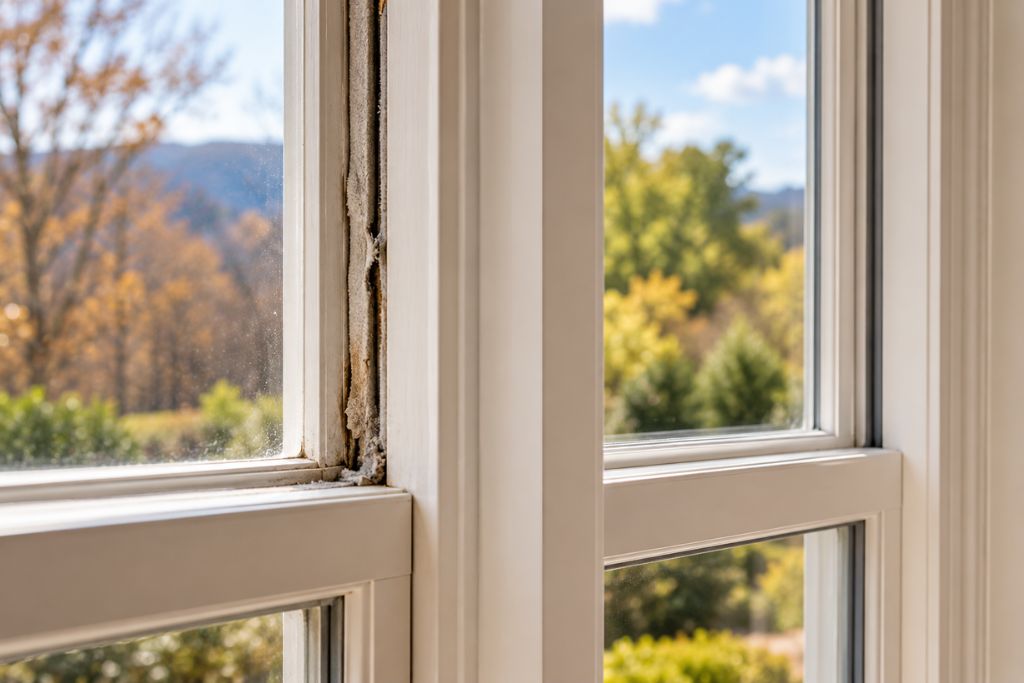
    Cracked glass can create safety concerns and compromise the window. Rotten, warped, or deteriorated frames can affect insulation, operation, and protection from air and moisture.

    That is when guessing gets expensive.

    When should you have a Pennsylvania window problem professionally evaluated?

    Some window problems are easy to spot. Others develop quietly until they become much harder to ignore. Persistent drafts, recurring moisture, deteriorating frames, damaged glass, or windows that no longer operate properly are all good reasons to have the situation evaluated. A window may look fine from the street while its seals, hardware, or frame tell a different story.

    Penn Windows & Doors has been helping local homeowners make those decisions since 1948. Our experience spans generations of Pennsylvania homes, from established Allentown neighborhoods to homes throughout Bethlehem, Easton, and the surrounding Lehigh Valley. We can help homeowners understand what they are seeing and discuss appropriate replacement options when a window has reached the end of its useful life.

    The goal is simple: understand the problem before deciding what to do about it.

    Your windows have stories, too.
    It pays to listen when they start complaining.

  • Should You Repair or Replace a Damaged Window?

    Should You Repair or Replace a Damaged Window?

    A damaged window does not always need to be replaced. The right choice depends on what is damaged, whether the frame is sound, and whether a repair will solve the problem for the long term.

    For Lehigh Valley homeowners, the first step is to identify the source of the problem. A draft around the sash, moisture between glass panes, and a deteriorating frame may call for different solutions.

    When can a damaged window be repaired?

    Repair may make sense when the problem is limited and the window remains structurally sound. Examples include:

    • Worn weatherstripping or caulk
    • Loose or damaged hardware
    • A sash that sticks or needs adjustment
    • A small area of damage that has not weakened the frame
    • A broken component for which a replacement part is available

    Caulking and weatherstripping can address some air leaks without replacing the window. If a sash is hard to operate, have the hardware and frame checked before assuming the entire window needs replacement. U.S. Department of Energy guidance on air sealing

    Repair is also worth considering when a window is an original feature of a historic home. Preserving its materials and details may be important to the home’s character. The National Park Service recommends evaluating historic windows for repair before replacement.

    When is window replacement the better choice?

    Replacement may be the more practical option when damage is extensive, problems keep returning, or a repair will not restore the window’s operation or comfort.

    Signs that call for a closer evaluation include:

    • Significant rot, warping, or structural damage to the frame
    • Multiple problems affecting the same window
    • A window that remains difficult to open, close, or lock after repair options have been considered
    • Persistent drafts after gaps and weatherstripping have been checked
    • Performance or comfort problems that a limited repair is unlikely to resolve

    Moisture trapped between the panes often points to a failed seal in the insulated glass unit. Depending on the window, replacing the glass unit may be possible without replacing the entire window. A specialist can assess which options are available. Marvin’s guidance on fogging between panes

    For an older Allentown home, the decision may also involve its architectural appearance. Consider whether a proposed replacement will suit the home as well as solve the performance problem.

    How can Penn Windows & Doors help?

    Penn Windows & Doors has served the Lehigh Valley since 1948. Homeowners in Allentown, Bethlehem, Easton, and surrounding communities can visit our showroom at 1518 Union Boulevard in Allentown to see full-size window samples and discuss replacement options.

    We specialize in custom replacement windows and install the products we sell. If replacement appears to be the right choice, our team can discuss the project, take measurements, explain the available products, and provide an estimate. Our installations include a 10-year workmanship and service warranty.

    Penn does not repair windows it did not install or replace glass in those windows. If a repair is the better option for an existing window installed by another company, contact a qualified window repair specialist. For a window Penn installed, contact us to discuss available service and warranty options. Penn Windows & Doors service information

    What is the best way to decide?

    Look beyond the visible damage. Check the frame, glass, seals, hardware, and operation, then find out whether a repair would address the underlying problem. If both repair and replacement are possible, compare their scope and likely long-term value before deciding.

    A sound window with an isolated issue may have years of use left. A window with extensive damage or recurring problems may be a better candidate for replacement. The right answer starts with an accurate assessment of the window you have.

  • What Aquarium Fish Benefit From Live Food?

    What Aquarium Fish Benefit From Live Food?

    For fishkeepers in Hoffman Estates and across Chicagoland, choosing live food starts with knowing what your fish actually eat. It can be useful for young fish, species that hunt small prey, and fish that need encouragement to feed. The right choice depends on the species, life stage, and size of the food.

    Live foods can provide nutrition and stimulate natural feeding behavior. They are not essential for every aquarium fish, though, and they may not provide a complete diet on their own. Merck Veterinary Manual

    Which aquarium fish benefit from live food?

    1. Fry: Tiny Fish, Serious Appetites

    Baby fish often benefit from appropriately sized live foods, especially newly hatched brine shrimp. These tiny Artemia are suitable for many fry, but some fry need even smaller foods. Match the food to the size and nutritional needs of the species you are raising. University of Florida guidance

    Other options include microworms and vinegar eels for very small fish. Size matters here. A meal does not help much if your fry cannot fit it in their mouths.

    2. Bettas: The Tiny Hunters

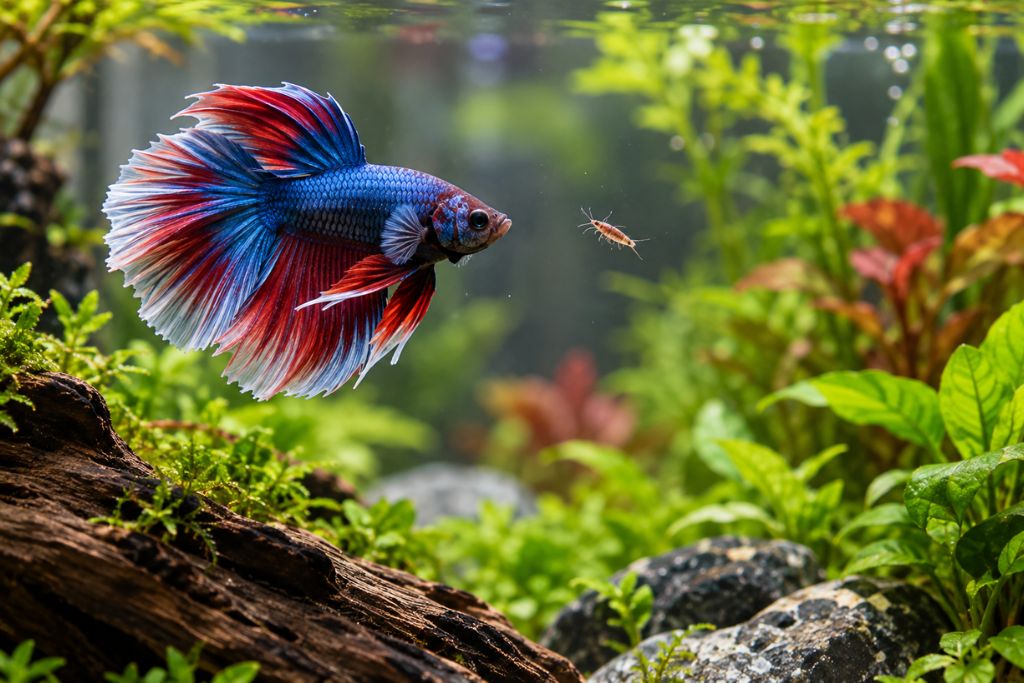
    Bettas are carnivorous and often respond strongly to moving prey. Live brine shrimp and appropriately sized worms can provide enrichment and encourage feeding.

    Offer live food as part of a diet suited to your betta, rather than assuming that live food alone meets all its needs.

    3. Killifish: Live-Food Enthusiasts

    Killifish are another group that can benefit from live foods such as brine shrimp, daphnia, and mosquito larvae from safe, controlled sources.

    Live foods are especially useful when conditioning fish for breeding. They can provide extra variety and help stimulate natural feeding behavior.

    4. Discus and Other Reluctant Eaters

    Moving foods such as brine shrimp or daphnia may encourage some reluctant fish to eat. A sudden loss of appetite, however, can also signal a problem with water quality or the fish’s health. Check the aquarium conditions and seek advice about a fish that continues to refuse food. Merck Veterinary Manual

    Live food can be a feeding option, but it should not replace finding the cause of a change in appetite.

    5. Puffers and Snail-Eating Loaches

    Some puffers and loaches eat live snails. For some puffer species, appropriately sized hard-shelled prey can also help wear down teeth that grow throughout life. Feeding needs vary by species, so check what is suitable for the fish you keep. Research on pufferfish teeth

    Is live food right for every aquarium fish?

    No. A balanced diet should match the species. Prepared, frozen, and other foods can all play important roles.

    Live food also needs careful sourcing. Wild-caught organisms can introduce unwanted pathogens, parasites, or contaminants. Reputable sources and proper handling matter. Merck Veterinary Manual

    How can Aquarium Adventure help with fish nutrition?

    At Aquarium Adventure, we look at the fish, the aquarium, and the goal behind the feeding plan. Our aquatic professionals can help you choose appropriate foods for your species and life stage.

    Visit our team at 11 Golf Center in Hoffman Estates, and tell us your fish’s species, life stage, and current diet. That gives us a useful starting point for discussing whether live food belongs in its feeding plan.

    The best dinner is one that meets your fish’s needs.

  • When Should You Hire an Aquarium Maintenance Company?

    When Should You Hire an Aquarium Maintenance Company?

    You have an aquarium because you enjoy the underwater world. You want to understand your fish, learn the equipment, test the water, and keep everything looking its best. That is part of the adventure.

    But aquarium care involves more than clean glass and clear water. As a system becomes larger or more complex, maintenance can require real time, experience, and attention to detail. That is when professional aquarium maintenance can make a meaningful difference.

    Why does timing matter in aquarium maintenance?

    A healthy aquarium depends on balance. Water chemistry, filtration, lighting, temperature, fish health, plants, and the physical environment all work together.

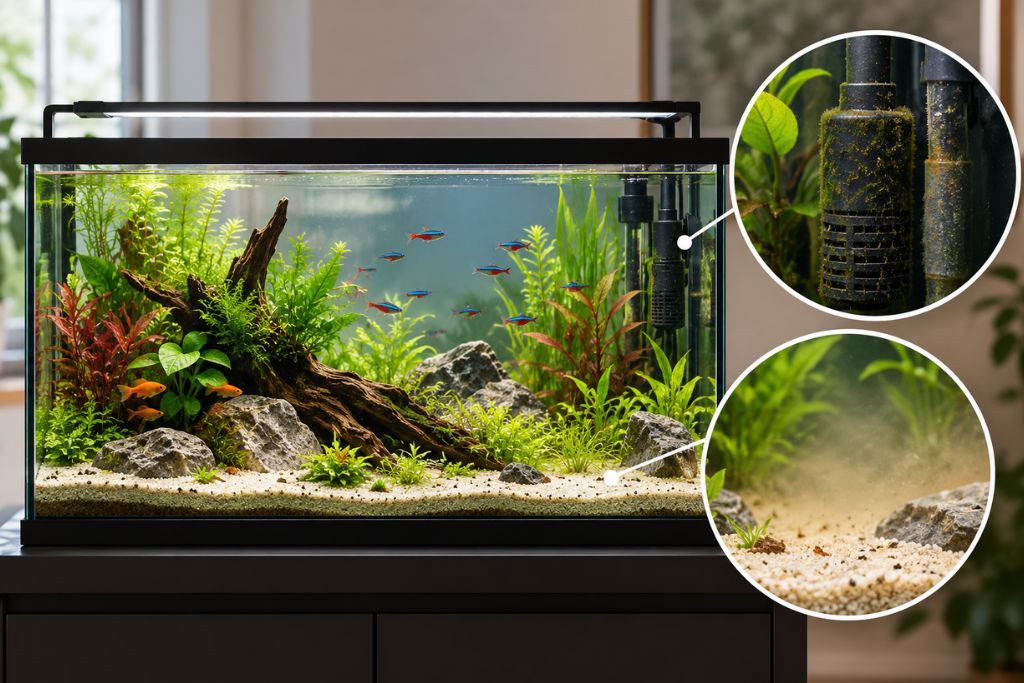
    Small changes can become larger problems when they go unnoticed. Repeated algae growth, unusual fish behavior, cloudy water, or equipment issues can signal that something needs attention.

    Professional maintenance is not simply about making an aquarium look clean. It is about understanding the system and keeping its different parts working together.

    When should you hire an aquarium maintenance company?

    There are several situations when bringing in an aquatic professional makes sense:

    1. You are falling behind on routine maintenance

    Busy schedules happen. Missed maintenance can lead to accumulating algae, debris, and water-quality concerns. A scheduled service can keep essential care on track.

    2. Your aquarium keeps developing the same problems

    Persistent algae, cloudy water, or recurring water-quality issues deserve more than another quick cleaning. A professional can evaluate the system and look for contributing factors.

    3. You are starting a new or more complex aquarium

    New setups bring important decisions about filtration, water chemistry, stocking, lighting, plants, and fish compatibility. Professional guidance can help establish the system correctly from the beginning.

    4. Your fish or plants are behaving differently

    Changes such as unusual hiding, poor appetite, lethargy, or other abnormal behavior should not be ignored. Fish health can be affected by water quality, equipment problems, stress, or disease.

    5. Your aquarium requires more technical care

    Large, saltwater, reef, planted, and specialty aquariums can demand more precise maintenance. Professional care can include testing pH, alkalinity, salinity, and trace elements, plus evaluating filtration and aquatic life.

    6. You are traveling or moving the aquarium

    Aquariums still need attention while you are away. Moving one also requires careful handling of fish, plants, equipment, and the established biological system.

    How can Aquarium Adventure help?

    At Aquarium Adventure, our professional Aquatic Technicians provide complete maintenance for residential and commercial aquariums. Service can include water testing, partial water exchanges, filter evaluation, detailed cleaning, lighting inspections, and fish and plant health checks.

    Our Hoffman Estates team brings aquatic expertise backed by an established aquarium showroom and years of hands-on experience. That means we can help you understand your system, not simply service it.

    From Golf Center to the wider Hoffman Estates and Poplar Creek area, Aquarium Adventure is here to help you keep your aquatic environment healthy, balanced, and beautiful.

    What if I still want to handle some maintenance myself?

    You absolutely can. Professional maintenance does not mean stepping away from the hobby.

    Think of it as having an experienced aquatic resource when your aquarium needs more time, knowledge, equipment, or attention than you can provide. The goal is simple: a healthy aquarium that you can enjoy.